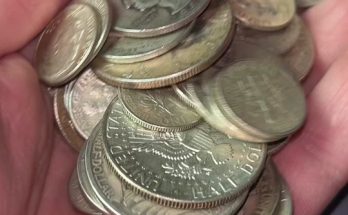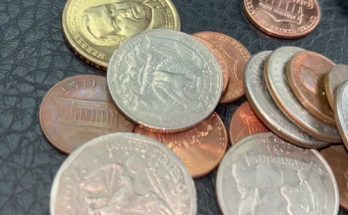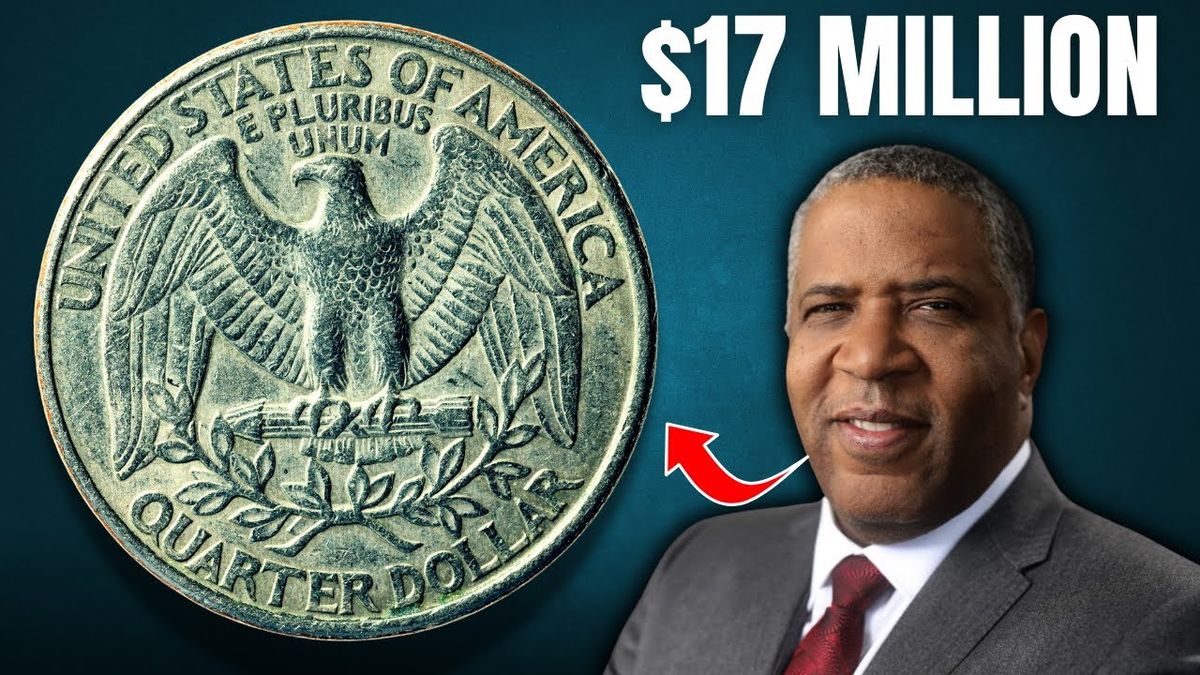
The Washington Quarter, a cornerstone of U.S. circulation for nearly a century, harbors a select few coins that are considered numismatic masterpieces and are worth incredible sums, often into the millions of dollars in promotional content. These highly valuable quarters typically owe their worth to extreme rarity, key dates, or spectacular minting errors that slipped past quality control.
The difference between a pocket change quarter and a Million-Dollar Quarter is often a single, specific detail—a wrong metal, a missing mark, or a doubled inscription.
1. The Transitional Planchet Errors (1965)
These errors involve coins struck on the wrong metal blanks during the U.S. Mint’s switch in composition.
A. 1965 Struck on a 90% Silver Planchet
This is arguably the most valuable error in the clad Washington Quarter series.
-
The Error: In 1965, the Mint stopped using 90% silver for quarters and switched to a clad (copper-nickel) composition. However, a very small quantity of leftover silver planchets intended for 1964 were accidentally struck with the 1965 date.
-
How to Spot: A genuine 1965 silver quarter will have a solid silver-colored edge (the common clad quarter has a visible copper stripe) and will weigh 6.25 grams (the clad quarter weighs 5.67 grams) .
-
Value: Because of their extreme rarity, authenticated examples are worth tens of thousands of dollars, with unverified promotional claims reaching as high as $40 Million for similar transitional pieces.
2. The Key Dates and Low-Mintage Issues
Value can also be driven by extremely low mintage numbers, especially for the early silver issues.
A. 1932-D and 1932-S Quarters
These are the undisputed key dates of the Washington Quarter series.
-
Rarity: Struck during the Great Depression, the Denver (D) mint produced only 436,800 quarters, and the San Francisco (S) mint produced just 408,000, making them the lowest-mintage quarters in the entire series.
-
Value: Even in low-grade, circulated condition, these coins are worth hundreds of dollars. In high uncirculated grades (MS65 and better), they can sell for $40,000 or more.
3. Modern Minting Errors
Recent quarters have yielded their own valuable errors due to die flaws and planchet mix-ups.
A. 2004-D Wisconsin “Extra Leaf” Quarter
This error from the State Quarter series caused a massive coin search nationwide.
-
The Error: Due to a flaw on the die, an extra leaf appears on the ear of corn on the reverse. The two primary varieties are the “Extra Leaf High” and “Extra Leaf Low.”
-
Value: These quarters can fetch hundreds of dollars, with certified, high-grade examples selling for thousands of dollars.
B. 1999 Experimental Planchet Errors
A handful of early State Quarters (like the Georgia or Connecticut issues) were accidentally struck on the golden-colored planchets intended for the Sacagawea Dollar.
-
How to Spot: The coin will be the size of a quarter but have a distinct golden color.
-
Value: These transitional errors are incredibly rare and highly valued, with promotional values reaching as high as $18 Million.
🚨 Crucial Collector’s Reminder
The value of any coin, especially errors, hinges critically on its grade (condition). A heavily circulated coin is worth significantly less than an uncirculated Mint State (MS) equivalent. For instance, a circulated 1968 quarter is 25¢, but an uncirculated one sold for $9,400.00. Do NOT clean any coin you suspect is valuable; cleaning destroys its numismatic worth.
Would you like me to find the latest auction results for the 1932-D and 1932-S Silver Quarters?