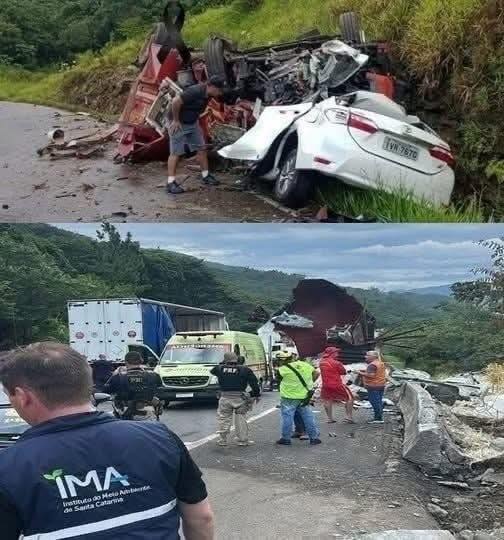
At kilometer 446 of BR-251, near the small rural community of Barrocão, in the municipality of Grão Mogol, located in northern Minas Gerais, Brazil.
The impact was so intense that both vehicles were thrown off the roadway into a difficult-to-access area, complicating…
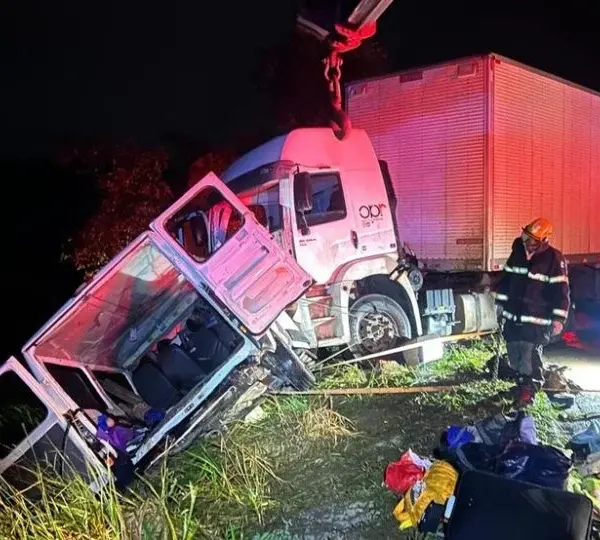
On the evening of Tuesday, May 13, 2025, at approximately 9:30 PM, a severe head-on collision between a passenger van (minibus) and a heavy-haul truck (“carreta”) resulted in a major tragedy.
At kilometer 446 of BR-251, near the small rural community of Barrocão, in the municipality of Grão Mogol, located in northern Minas Gerais, Brazil.
The impact was so intense that both vehicles were thrown off the roadway into a difficult-to-access area, complicating rescue operations and significantly increasing the severity of the event.
Travel Routes and Initial Findings
According to early information released by authorities, the heavy-haul truck was empty at the time of the crash.
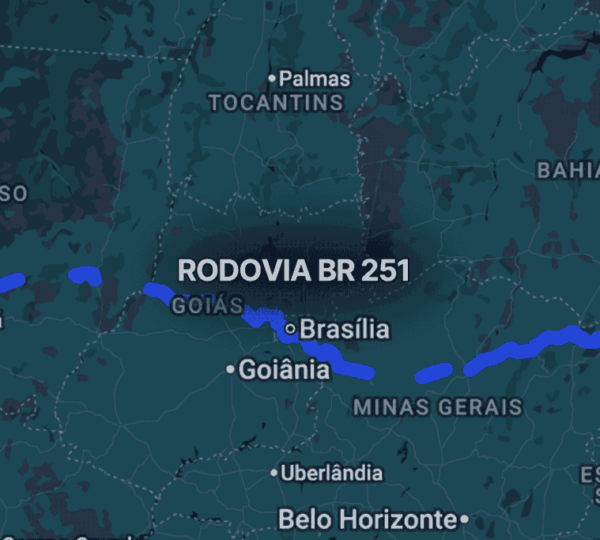
It was traveling from the Northeast region of Brazil toward Rio Grande do Sul, following a route through Bahia and passing toward the city of Montes Claros.
The van, on the other hand, was transporting workers who were returning to the state of Ceará after departing earlier from the Triângulo Mineiro region.
Investigators confirmed that this route is commonly used by long-distance transport vehicles, including heavy trucks and passenger vans.
Due to the truck being unloaded at the time, its braking and road behavior characteristics may have differed from a fully loaded vehicle.
However, experts have not yet issued a conclusive explanation for how the collision occurred or what the primary cause was.
Rapid Response From Emergency and Rescue Teams
Immediately after the incident was reported, multiple emergency units were dispatched to the site.
Responding agencies included the Corpo de Bombeiros Militar de Minas Gerais (CBMMG), the Serviço de Atendimento Móvel de Urgência (SAMU), the Polícia Rodoviária Federal (PRF), and forensic teams from the Polícia Civil de Minas Gerais (PCMG).
Once crews arrived, they found a highly complex scenario:
the vehicles were extensively damaged, severely deformed, and located off the pavement in an area with limited access.
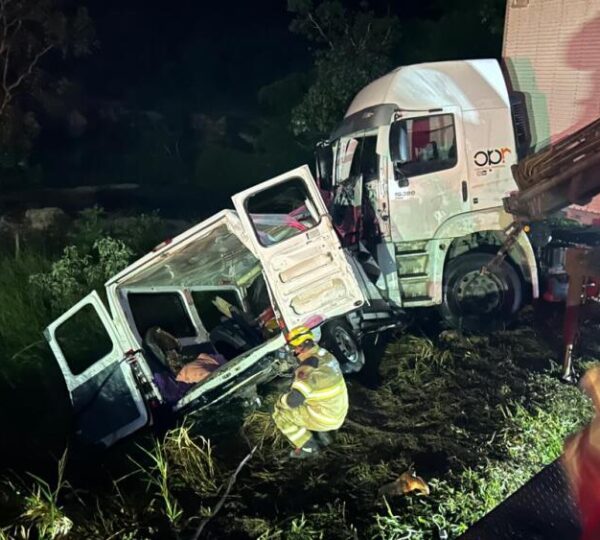
Many passengers were trapped inside the wreckage, requiring the use of specialized extrication techniques known as “desencarceramento.”
This process involved hydraulic tools, cutting equipment, and coordinated teamwork under challenging nighttime conditions.
Victims, Injuries, and Medical Response
There were 17 occupants inside the van at the time of the collision.
Unfortunately, nine people lost their lives on the scene, including eight adults and one child.
Their bodies were later transported to the Instituto Médico Legal (IML) in Montes Claros for proper identification and autopsy procedures.
At least eight other van passengers sustained injuries of varying severity. Among the injured were:
An 8-year-old child reported in stable condition.
A 27-year-old man in critical condition, requiring assisted ventilation.
A 36-year-old woman and a 26-year-old man, both in stable condition.
Other victims were transported to hospitals in the nearby municipality of Francisco Sá, where they remained under observation.
As of the initial days following the incident, medical authorities had not released further updates regarding the long-term recovery of the injured.
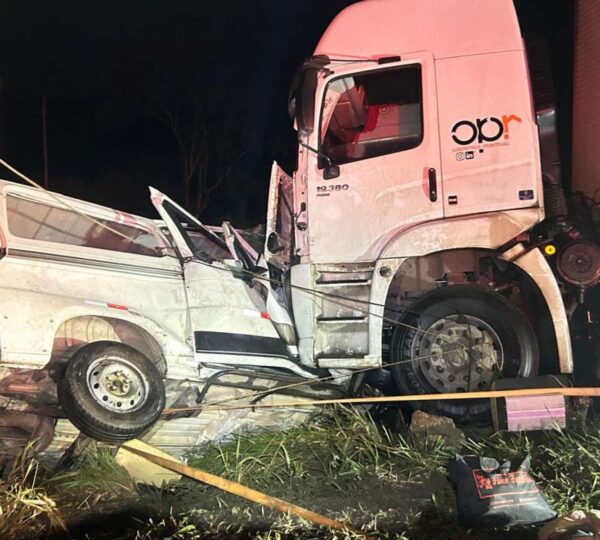
Inside the heavy-haul truck, there were only two occupants — the driver and a passenger.
Both suffered minor injuries and were evaluated and released at the scene after receiving medical assistance.
Road Closure and Post-Accident Procedures
Because of the severity of the crash and the need for extrication, the PRF closed BR-251 in both directions.
The blockage lasted for approximately six hours, continuing until around 3:40 AM on Wednesday, May 14, when the vehicles were removed and the area was cleared for safe passage.
Forensic specialists collected tire marks, debris distribution, impact angles, and road conditions as part of their preliminary investigation.
These elements will contribute to determining whether human error, mechanical failure, road conditions, or weather played a decisive role.
Possible Causes and Witness Statements
Although the official final report has not yet been released, early observations indicate several possible contributing factors:
Witnesses reported rainfall at the time of the crash, which may have caused reduced visibility and a slippery surface.
The road has sharp curves, elevation changes, and limited shoulder space, increasing the risk of frontal collisions.
Due to the truck being empty, witnesses suggest it may have been more susceptible to destabilization or reduced traction, though this remains unconfirmed.
Authorities have emphasized that all scenarios are still under active investigation, and no definitive conclusion has been made.
Why BR-251 Is Considered One of the Most Dangerous Highways in the Region
This tragedy adds to a long-standing concern about BR-251, which is widely recognized as one of the most hazardous highways in Minas Gerais and even throughout eastern Brazil. Several factors contribute to this reputation:
Single-lane sections in mountainous areas with steep gradients and tight curves.
Extremely heavy traffic, especially of trucks transporting goods between the Northeast and southern Brazil.
Lack of emergency lanes, inadequate physical separation between opposing directions, and limited visibility in several stretches.
Weather vulnerability, with frequent fog, rain, and sudden climate changes.
High accident rates, with 233 fatal accidents in 2024 and 73 recorded in the first quarter of 2025 alone.
Because of these ongoing risks, BR-251 is often referred to locally as the “rodovia da morte” — “the road of death.”
Reactions, Consequences, and the Road Ahead
Public authorities, including CBMMG, PRF, and PCMG, have initiated full technical analysis procedures to determine the exact causes of the crash. The tragedy has renewed calls for urgent improvements to the highway, including:
Doubling lanes
Establishing wider emergency shoulders
Installing more effective signage
Improving pavement quality
Intensifying vehicle inspection and safety enforcement
A project known as Rota Gerais proposes several upgrades to BR-251, but as of now, it remains under technical evaluation with no confirmed implementation date.
Social Impact and Community Concerns
The accident deeply affected the community, not only because of the high number of victims but also due to the ongoing sense of vulnerability experienced by residents and frequent travelers.

Families of the victims, local drivers, and regional commuters have expressed increasing concerns about road safety, demanding stronger preventive measures and faster implementation of infrastructure improvements.
Final Reflection: Why This Accident Demands Attention
This tragedy is not an isolated case. Instead, it reflects a broader and recurring problem on a road already known for its dangerous conditions.
When a highway combines mountainous terrain, high-speed traffic, limited infrastructure, and large numbers of long-distance transport vehicles, the margin for error becomes extremely small.
Every accident, especially one with nine fatalities including a child, is a painful reminder of the urgent need for change.
These lives lost cannot remain just part of another statistic. They must serve as a call for responsibility, investment, and action — so that future tragedies on BR-251 can be prevented.
On the evening of Tuesday, May 13, 2025, at approximately 9:30 PM, a severe head-on collision between a passenger van (minibus) and a heavy-haul truck (“carreta”) resulted in a major tragedy.
At kilometer 446 of BR-251, near the small rural community of Barrocão, in the municipality of Grão Mogol, located in northern Minas Gerais, Brazil.
The impact was so intense that both vehicles were thrown off the roadway into a difficult-to-access area, complicating rescue operations and significantly increasing the severity of the event.
Travel Routes and Initial Findings
According to early information released by authorities, the heavy-haul truck was empty at the time of the crash.
It was traveling from the Northeast region of Brazil toward Rio Grande do Sul, following a route through Bahia and passing toward the city of Montes Claros.
The van, on the other hand, was transporting workers who were returning to the state of Ceará after departing earlier from the Triângulo Mineiro region.
Investigators confirmed that this route is commonly used by long-distance transport vehicles, including heavy trucks and passenger vans.
Due to the truck being unloaded at the time, its braking and road behavior characteristics may have differed from a fully loaded vehicle.
However, experts have not yet issued a conclusive explanation for how the collision occurred or what the primary cause was.
Rapid Response From Emergency and Rescue Teams
Immediately after the incident was reported, multiple emergency units were dispatched to the site.
Responding agencies included the Corpo de Bombeiros Militar de Minas Gerais (CBMMG), the Serviço de Atendimento Móvel de Urgência (SAMU), the Polícia Rodoviária Federal (PRF), and forensic teams from the Polícia Civil de Minas Gerais (PCMG).
Once crews arrived, they found a highly complex scenario:
the vehicles were extensively damaged, severely deformed, and located off the pavement in an area with limited access.
Many passengers were trapped inside the wreckage, requiring the use of specialized extrication techniques known as “desencarceramento.”
This process involved hydraulic tools, cutting equipment, and coordinated teamwork under challenging nighttime conditions.
Victims, Injuries, and Medical Response
There were 17 occupants inside the van at the time of the collision.
Unfortunately, nine people lost their lives on the scene, including eight adults and one child.
Their bodies were later transported to the Instituto Médico Legal (IML) in Montes Claros for proper identification and autopsy procedures.
At least eight other van passengers sustained injuries of varying severity. Among the injured were:
An 8-year-old child reported in stable condition.
A 27-year-old man in critical condition, requiring assisted ventilation.
A 36-year-old woman and a 26-year-old man, both in stable condition.
Other victims were transported to hospitals in the nearby municipality of Francisco Sá, where they remained under observation.
As of the initial days following the incident, medical authorities had not released further updates regarding the long-term recovery of the injured.
Inside the heavy-haul truck, there were only two occupants — the driver and a passenger.
Both suffered minor injuries and were evaluated and released at the scene after receiving medical assistance.
Road Closure and Post-Accident Procedures
Because of the severity of the crash and the need for extrication, the PRF closed BR-251 in both directions.
The blockage lasted for approximately six hours, continuing until around 3:40 AM on Wednesday, May 14, when the vehicles were removed and the area was cleared for safe passage.
Forensic specialists collected tire marks, debris distribution, impact angles, and road conditions as part of their preliminary investigation.
These elements will contribute to determining whether human error, mechanical failure, road conditions, or weather played a decisive role.
Possible Causes and Witness Statements
Although the official final report has not yet been released, early observations indicate several possible contributing factors:
Witnesses reported rainfall at the time of the crash, which may have caused reduced visibility and a slippery surface.
The road has sharp curves, elevation changes, and limited shoulder space, increasing the risk of frontal collisions.
Due to the truck being empty, witnesses suggest it may have been more susceptible to destabilization or reduced traction, though this remains unconfirmed.
Authorities have emphasized that all scenarios are still under active investigation, and no definitive conclusion has been made.
Why BR-251 Is Considered One of the Most Dangerous Highways in the Region
This tragedy adds to a long-standing concern about BR-251, which is widely recognized as one of the most hazardous highways in Minas Gerais and even throughout eastern Brazil. Several factors contribute to this reputation:
Single-lane sections in mountainous areas with steep gradients and tight curves.
Extremely heavy traffic, especially of trucks transporting goods between the Northeast and southern Brazil.
Lack of emergency lanes, inadequate physical separation between opposing directions, and limited visibility in several stretches.
Weather vulnerability, with frequent fog, rain, and sudden climate changes.
High accident rates, with 233 fatal accidents in 2024 and 73 recorded in the first quarter of 2025 alone.
Because of these ongoing risks, BR-251 is often referred to locally as the “rodovia da morte” — “the road of death.”
Reactions, Consequences, and the Road Ahead
Public authorities, including CBMMG, PRF, and PCMG, have initiated full technical analysis procedures to determine the exact causes of the crash. The tragedy has renewed calls for urgent improvements to the highway, including:
Doubling lanes
Establishing wider emergency shoulders
Installing more effective signage
Improving pavement quality
Intensifying vehicle inspection and safety enforcement
A project known as Rota Gerais proposes several upgrades to BR-251, but as of now, it remains under technical evaluation with no confirmed implementation date.
Social Impact and Community Concerns
The accident deeply affected the community, not only because of the high number of victims but also due to the ongoing sense of vulnerability experienced by residents and frequent travelers.
Families of the victims, local drivers, and regional commuters have expressed increasing concerns about road safety, demanding stronger preventive measures and faster implementation of infrastructure improvements.
Final Reflection: Why This Accident Demands Attention
This tragedy is not an isolated case. Instead, it reflects a broader and recurring problem on a road already known for its dangerous conditions.
When a highway combines mountainous terrain, high-speed traffic, limited infrastructure, and large numbers of long-distance transport vehicles, the margin for error becomes extremely small.
Every accident, especially one with nine fatalities including a child, is a painful reminder of the urgent need for change.
These lives lost cannot remain just part of another statistic. They must serve as a call for responsibility, investment, and action — so that future tragedies on BR-251 can be prevented.