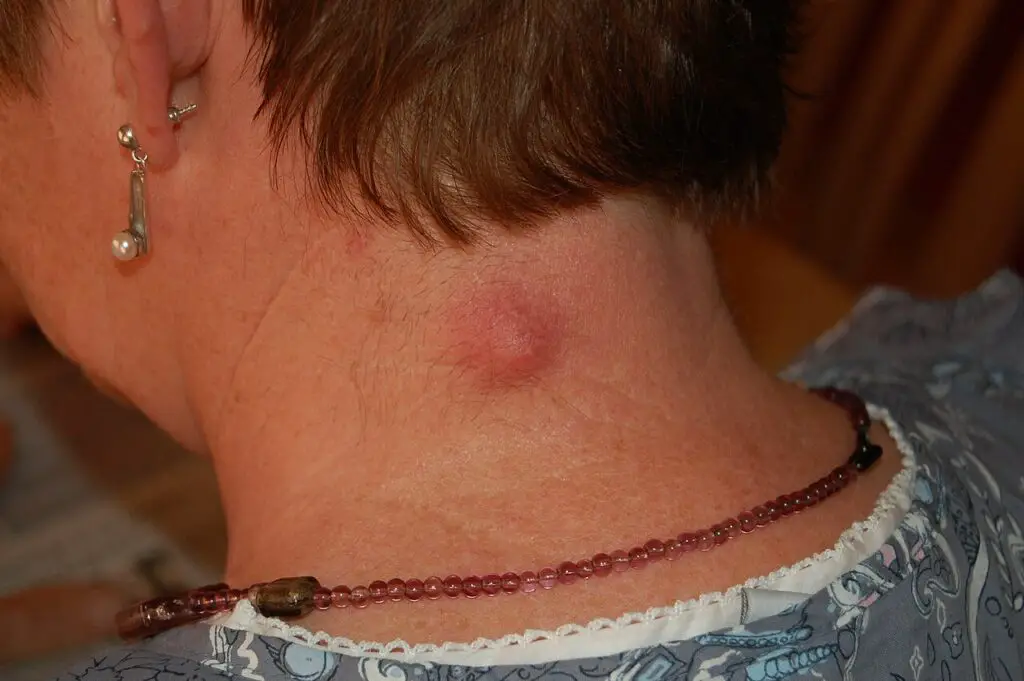
These lumps are different in size and appear because of various reasons, including skin issues or more serious conditions that require medical care. If you know the reason why the lump appeared somewhere on these areas, it would be easier to determine whether it’s something to just keep an eye on or something more serious and even life-threatening.
One common and usually harmless cause of a lump under the skin is an epidermoid cyst.
These cysts develop when skin cells don’t shed properly and instead build up beneath the surface. Over time, they form a small, slow-growing bump filled with keratin, a substance naturally found in skin, hair, and nails. Epidermoid cysts are often found on the neck, back, or behind the ears and may stay the same size for years.

While they are not painful and typically feel smooth and round, problems may arise if a cyst becomes irritated or infected. In that case, it can become red, swollen, tender or drain a thick, smelly discharge. At that point, it’s for the best to consult a doctor.
Other reasons for a cyst to form are minor skin injuries or when a hair follicle becomes blocked. These cysts are more typical at people who experience ongoing skin issues or are prone to acne. Also, they appear more at adults rather than children.
Most cysts are non-threatening, but in case their size changes over time, it’s important to have them checked by a medical professional.
Some people try home remedies like warm compresses to ease discomfort or reduce swelling, and while these methods may offer temporary relief, they don’t remove the cyst itself. Squeezing or trying to drain a lump at home can make things worse by causing infection or scarring, so it’s best not to do it on your own.

Cysts are diagnosed with a simple physical exam. If there’s any doubt about what the lump is, imaging tests or a biopsy may be recommended. Treatment depends on the situation. Some cysts are left alone, while others may be drained or surgically removed, especially if they become painful or keep returning.
If a lump changes in size or appearance, causes pain, or is associated with other symptoms such as fever or unexpected weight loss, you should contact your healthcare professional. Although the majority of lumps are benign, having them evaluated early can spare you worry.
Please SHARE this article with your family and friends on Facebook.
Bored Daddy
Love and Peace